Miniature Schnauzer puppies for sale in Miami
The Miniature Schnauzer is a small, sturdy, bearded dog with a big personality and a watchdog's alert bark. Schnauzers are smart, loving, and low-shedding, but their wiry coat needs regular grooming and their diet needs care.
1 puppy available
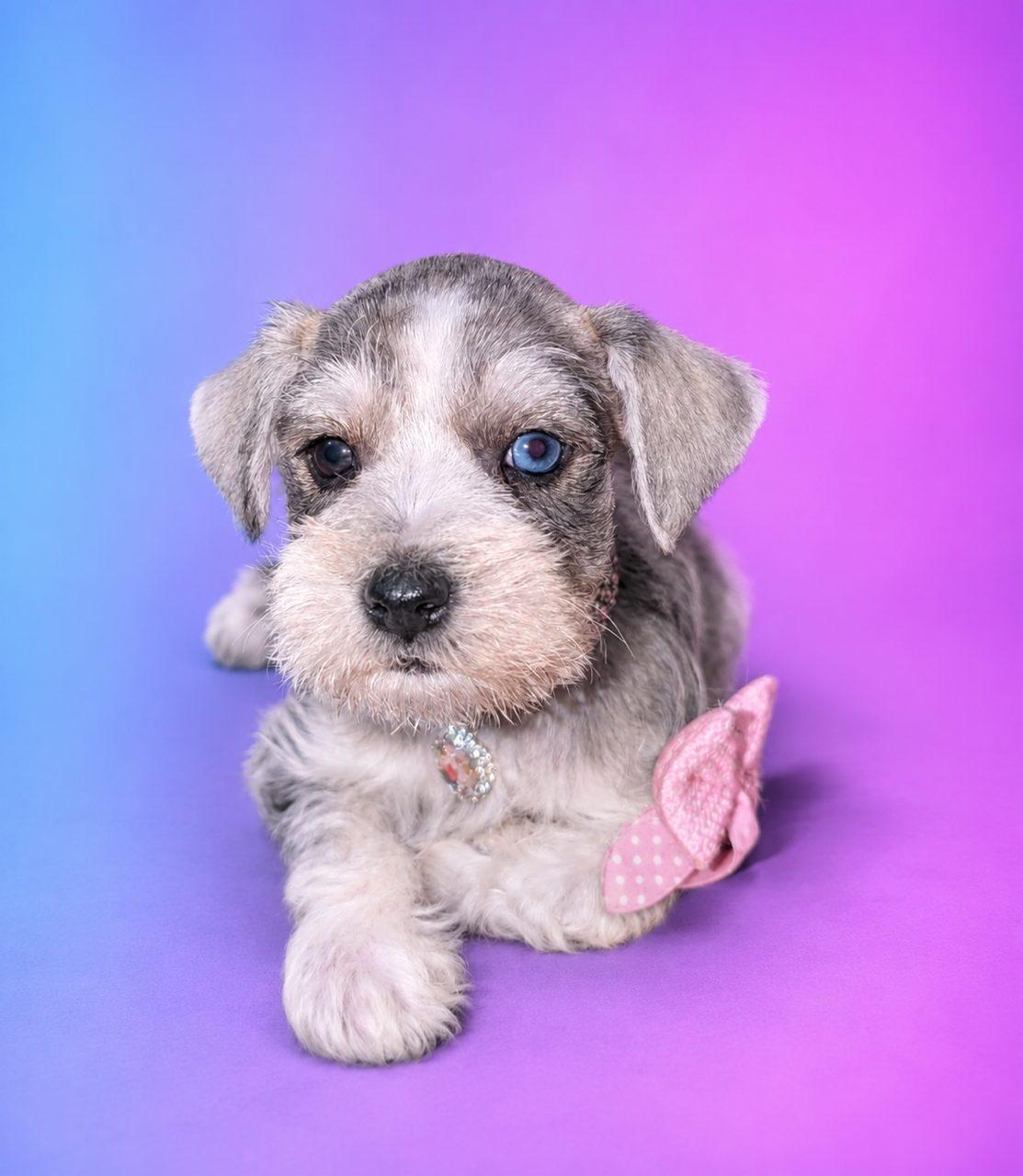
Temperament and personality
Miniature Schnauzers are bright, spunky little dogs with bushy eyebrows, a beard, and a lot of opinions. They were bred in Germany as farm dogs and ratters, and they still have a terrier-like alertness and a strong sense of duty.
Schnauzers are devoted to their families and love to be involved in whatever you are doing. They are playful and funny, but also sturdy and confident. Most are friendly with visitors once they have been introduced, though they will always announce them first.
That alert nature makes them excellent little watchdogs. It also means barking is the number one complaint from Schnauzer owners. Early training helps a lot. They may chase squirrels, lizards, and small pets, so keep them leashed outside.
Is a Miniature Schnauzer right for you?
A great fit if you
- Want a small but sturdy dog with a big personality
- Like a dog that will let you know when someone is at the door
- Prefer a low-shedding coat and are ready for regular grooming visits
- Will feed a consistent, low-fat diet and skip fatty table scraps
- Enjoy daily walks and play
Think twice if you
- Live in a building with strict noise rules or thin walls
- Do not want to budget for grooming every 5 to 8 weeks
- Have pet rodents, birds, or other small animals loose at home
- Like to share fatty human food with your dog
- Want a dog that is happy alone most of the day
Health: what to know
This is general information, not veterinary advice. Always talk with your vet about your own dog.
Miniature Schnauzers are generally sturdy and long-lived, but they have some well-known breed concerns:
- Pancreatitis, painful inflammation of the pancreas. Schnauzers are prone to high blood fats, and a fatty meal or table scraps can trigger an attack
- Bladder stones, which can cause straining, frequent peeing, or blood in the urine
- Diabetes
- Eye problems such as cataracts and progressive retinal atrophy
- Skin issues, including small bumps along the back known as Schnauzer comedo syndrome
- Liver shunts and some heart rhythm problems
Before you choose a puppy, ask what health information is available for the puppy. Useful tests include an eye exam by a veterinary eye specialist, a heart exam, a patella check, and DNA tests for conditions seen in the breed, such as myotonia congenita and certain eye diseases.
Call your vet right away if your Schnauzer is vomiting, has a painful or swollen belly, hunches over, refuses food, or seems weak, especially after eating something fatty. Also call for straining to pee, blood in the urine, a sudden increase in thirst, or a cloudy or squinting eye.
Pet insurance is worth considering while your puppy is young, before any condition becomes pre-existing. Check how the policy covers chronic conditions like pancreatitis and diabetes.
Florida has a pet lemon law that protects puppy buyers. Learn more about your rights under Florida law.
Daily care
Exercise
Schnauzers need about 45 to 60 minutes of activity a day. Brisk walks, fetch, and games that use their brain keep them happy. Many enjoy dog sports like agility and earthdog. A tired Schnauzer barks less.
Grooming
The double coat has a wiry outer layer and a soft undercoat. It sheds very little, but it keeps growing and needs a professional groom every 5 to 8 weeks. Most pet Schnauzers are clipped, which softens the coat over time. Hand-stripping, where loose dead hairs are pulled out by hand, keeps the coat wiry and the colors richer, but it takes longer and costs more.
Between grooms, brush a few times a week and comb the beard and leg hair to prevent mats. Wipe the beard after meals so food does not get trapped. Trim nails every few weeks, check the ears weekly, and brush teeth several times a week.
Feeding
Feed a quality food that is not high in fat, following your vet's guidance on how much. Avoid fatty table scraps, bacon, sausage, and greasy leftovers, which are a common trigger for pancreatitis. Keep fresh water available, since good water intake supports bladder health, and ask your vet if your dog needs a special diet.
Training
Miniature Schnauzers are smart and learn quickly, but they can be willful. Use positive reinforcement with short, fun sessions. Teach a "quiet" cue early and reward calm behavior at the door and window. A puppy class helps with socialization and manners.
Living with a Miniature Schnauzer in Miami
Schnauzers handle warm weather better than flat-faced breeds, but Miami heat and humidity are still risky. Walk early in the morning or after sunset, keep midday outings short, and bring water. Know the signs of heatstroke: heavy panting, drooling, bright red gums, vomiting, weakness, or stumbling.
Many Miami owners keep their Schnauzer in a shorter summer clip. That is fine, but leave some coat for sun protection, especially on the back. Dry the beard and legs well after rain, baths, or swims to prevent skin problems.
Schnauzers can swim, but not all of them like it. Fence or supervise pools, use a dog life vest near pools, boats, and the beach, and teach your dog where the pool steps are.
For the Miami basics every dog owner needs, like hot pavement, parked cars, year-round parasites, cane toads and hurricane prep, see our Miami puppy care guide.
Colors and coat
Miniature Schnauzers have a wiry double coat with a distinctive beard, eyebrows, and leg furnishings. The AKC standard colors are salt and pepper, black and silver, and solid black.
You may also see white Miniature Schnauzers. White is accepted by some kennel clubs outside the US but not in the AKC standard. White Schnauzers can make lovely pets, and their coats can show beard staining, so wipe the face often.
Bringing your puppy home
Your first week sets the tone. Here is a simple checklist:
- Get supplies ready: crate, bed, food and water bowls, the same food your puppy has been eating, a harness, a leash, ID tag, chew toys, a slicker brush and metal comb, and puppy pads
- Book a first vet visit within a few days of bringing your puppy home
- Keep the vaccine schedule going and bring your puppy's records to the vet
- Book a short "puppy intro" groom so your puppy gets used to the clippers and table
- Start a crate and potty routine on day one: out after waking, eating, and playing
- Agree as a family on no fatty table scraps
- Begin socialization with new people, sounds, and places once your vet says it is safe
Questions about the breed or our current litters? Ask us about our Miniature Schnauzer puppies, and see our financing options.
Miniature Schnauzer FAQ
How big do Miniature Schnauzers get?
Most adult Miniature Schnauzers weigh about 11 to 20 pounds and stand about 12 to 14 inches tall at the shoulder. Males are usually a bit larger than females.
How long do Miniature Schnauzers live?
Miniature Schnauzers usually live about 12 to 15 years. A low-fat diet, a healthy weight, and regular vet care give them the best chance at a long life.
Do Miniature Schnauzers shed?
Very little. Their wiry coat holds loose hair instead of dropping it around the house, but it keeps growing and needs a professional groom every 5 to 8 weeks.
Are Miniature Schnauzers hypoallergenic?
No dog is truly hypoallergenic, but Schnauzers shed very little, and many people with mild allergies do well with them. Spend time around the breed before deciding if anyone at home has allergies.
Are Miniature Schnauzers good with kids?
Yes, most are playful, sturdy, and affectionate with children. Supervise young kids, and teach everyone to be gentle and not to feed the dog from their plates.
Can Miniature Schnauzers be left alone?
Adult Schnauzers can handle a few hours alone, but they love company and may bark when bored. Exercise before you leave, puzzle toys, and a midday visit help.
Do Miniature Schnauzers bark a lot?
Yes, they are alert watchdogs and tend to bark at noises and visitors. Daily exercise, early training with a "quiet" cue, and rewarding calm behavior make a big difference.
Are Miniature Schnauzers easy to potty train?
They are smart and usually pick it up well with a consistent schedule, crate training, and lots of praise and treats for going outside. Small bladders mean frequent trips at first.
What are common Miniature Schnauzer health problems?
Common issues include pancreatitis, bladder stones, diabetes, eye problems such as cataracts, and skin bumps. Avoid fatty foods, and ask about eye exams and DNA testing on the parents.
How much does a Miniature Schnauzer puppy cost?
Prices depend on color, lineage, and health testing. See our available puppies or contact us for current details.